WeLoveNoCode
A two-sided hiring platform for no-code talent, built in San Francisco. Verified developer profiles, project matching and in-platform collaboration, with $3M in project value matched so far.
A no-code talent market with no infrastructure
The no-code development market was growing faster than the infrastructure around it. Businesses that wanted to build on no-code platforms struggled to find vetted developers with demonstrable experience, and experienced developers struggled to be found by the right projects. The existing options were general freelance platforms, Upwork and Fiverr, where no-code work sat among thousands of other categories and a genuine specialist looked identical to someone hoping to learn on the job.
The cost of that fell on both sides. Clients hired on assertions and discovered the gap mid-project. Developers with a real track record competed on price against people with none, because the platform had no way to show the difference.
WeLoveNoCode was built in San Francisco to fix both sides of that problem: a platform specifically for no-code talent, where developers build profiles around the tools they actually use and the work they have completed, and where clients post projects knowing the candidates who apply are specialists.
Matching that had to work for both sides from day one
A marketplace is only useful when both sides have a reason to be there. The build had to solve the cold-start problem directly. A platform with no developers has no value for clients, a platform with no client projects has no value for developers, and each side waits for the other. The launch strategy was to onboard an initial cohort of verified developers before opening to clients, so the first client projects would surface relevant candidates immediately.
That put the weight on the profile and verification layer. Developer profiles had to be substantive enough to be compelling to clients before those clients had posted a single project, which meant the profile could not be a form the developer fills in. It had to be evidence.
The second constraint was trust in the other direction. Developers joining early were being asked to invest time in a platform with no projects on it yet. The profile had to be worth building for its own sake, as a portable record of work, regardless of when the first client arrived.
A two-sided marketplace with verified developer profiles
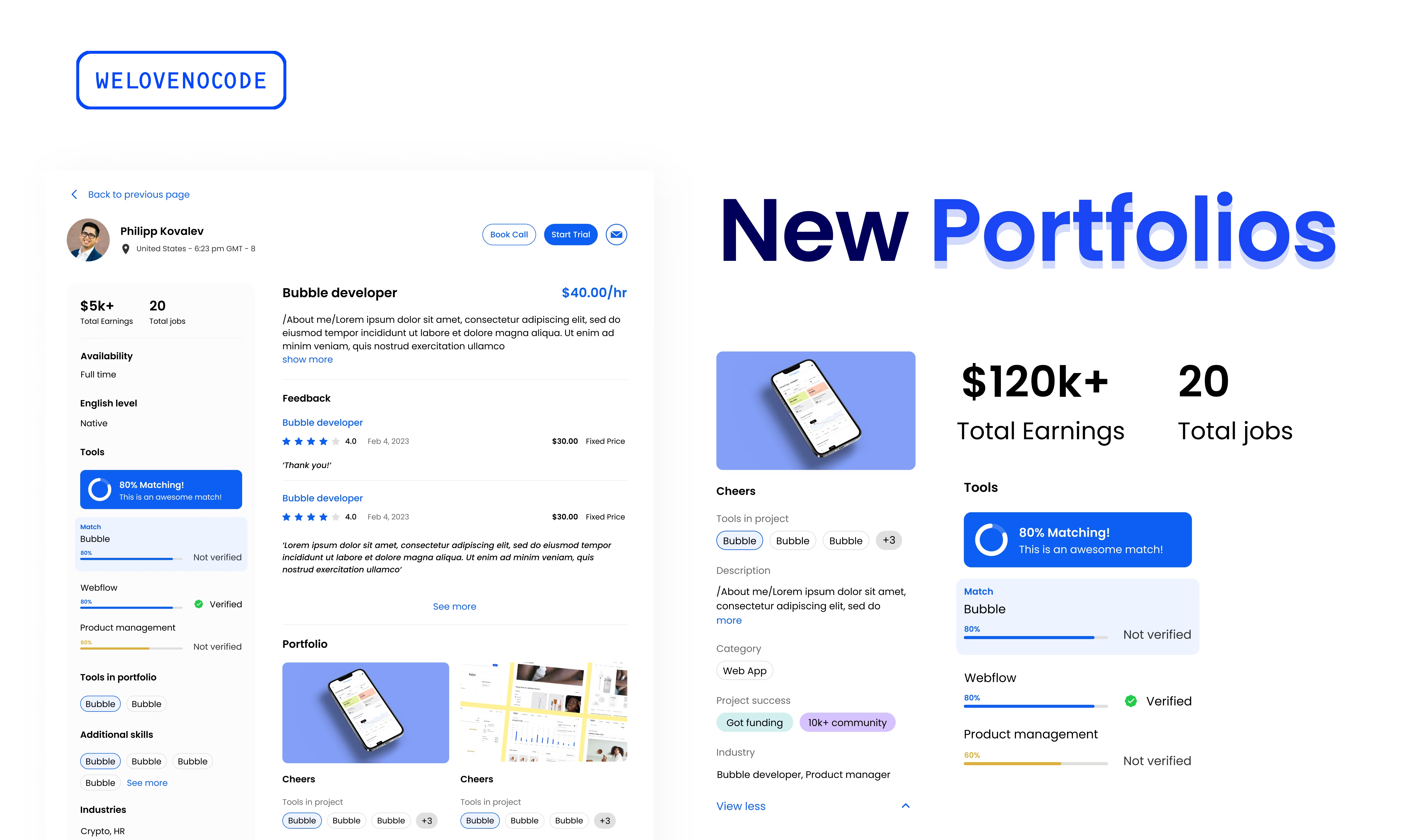
Developer profiles are built around demonstrated competency: the tools they work in, example projects with descriptions of what was built, client feedback from previous work, and the types of project they are available for. A developer cannot self-declare expertise. The profile is assembled from work evidence, not assertions, which is what makes it useful to a client who has been let down before.
Clients post projects with a brief, a budget range, a timeline and the tools they expect to use. The platform surfaces matching developers on tool expertise and project type. Developers apply with a short response to the brief. Clients review applications, shortlist, and initiate contact inside the platform.
From there, profile management and collaboration tools let clients and developers communicate, share documents and track project milestones without moving to email. A completed project can be added to the developer's profile with the client's permission, so the evidence base compounds with each engagement.
Why a specialist platform over a general freelance directory
The general freelance platforms have more traffic, and traffic is the usual argument for building on top of them rather than beside them. The argument for a specialist platform is match quality. A client posting a no-code project on a general platform receives applications from developers who have the expertise and developers who plan to acquire it on the client's budget, with no reliable way to tell them apart before hiring.
A platform where every profile is built around no-code tools and completed no-code projects makes that distinction immediate. The matching runs on the tools themselves, so a project that names a particular tool reaches developers who have shipped with it.
The trade-off is a smaller pool. A specialist marketplace will never list as many developers as a general one. The bet was that better match quality means fewer failed projects and more repeat clients, and that repeat clients are the only sustainable basis for a marketplace.
How a project moves through it
A client writes a brief, sets a budget range and a timeline, and names the tools. Matching developers appear as the project is posted. Applications arrive as short responses to the brief rather than boilerplate, and the client reads each one against a profile that shows what the developer has actually built.
Once a developer is chosen, the work runs inside the platform: messages, shared documents, milestones marked as they are reached. The client no longer chases progress by email, and the developer no longer reconstructs a portfolio for every pitch; the completed project joins their profile with the client's consent.
Verification happens at the profile, not at the project. That is what lets the client side move quickly. The checking has already been done.
What the platform has matched
The platform has matched $3M in project value between clients and no-code developers. Developers who joined early have built profiles with multiple completed projects and repeat client relationships. Clients who have posted report higher first-contact relevance than on general platforms: fewer applications from unsuitable candidates and a faster route to a shortlist.
The foundation is a profile model that gets more accurate with every completed project. Each engagement leaves evidence behind, and that evidence is what the next client matches against.

Start a project.
Book a call or send a brief. The engineers who would build it read everything.