ProLine CRM
A multi-tenant CRM built for ProLine's construction sales clients, with per-client deal stages and a permission model that keeps every contractor's pipeline strictly its own. $4M tracked.
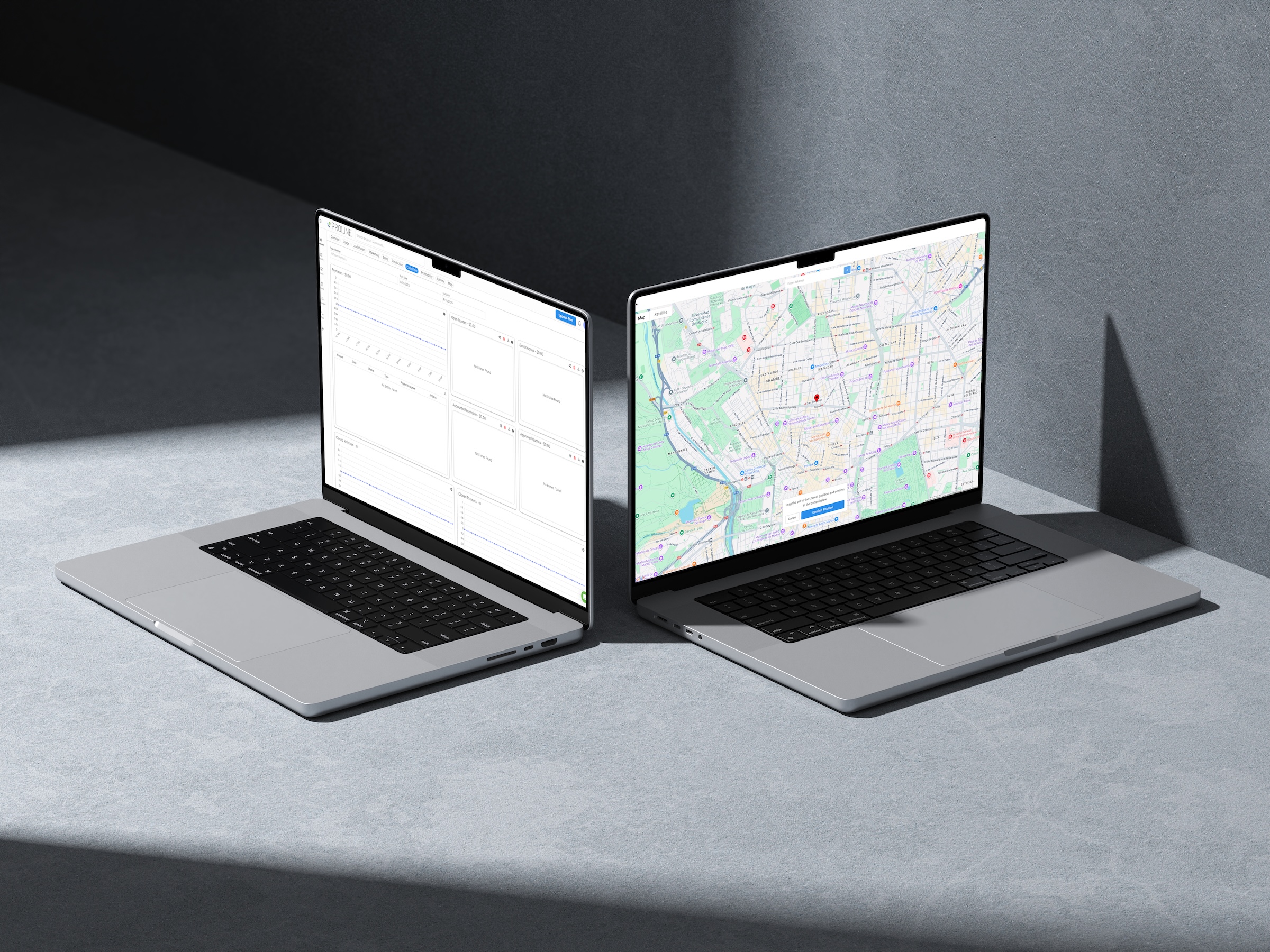
A pipeline nobody could put a number on
ProLine manages sales operations for construction contractors: companies that sell roofing, windows, gutters and siding through direct sales teams. Their clients are mid-sized contracting businesses with anywhere from five to thirty reps in the field, and the standard infrastructure at that size is a mix of spreadsheets, text threads and shared email inboxes. It holds together until a rep leaves with deals still open, a follow-up falls through the gaps, or an owner asks for a pipeline figure and nobody can produce one with confidence.
ProLine's service is sales management. They take over the pipeline, the follow-up cadence and lead assignment across a contractor's rep team, and they do it for several contractors at once. That needed a CRM built around how construction sales actually runs, with deal stages that match a contractor's process rather than a template inherited from software sales.
Several companies, one system, no leakage
The defining constraint was the permission structure. ProLine manages sales for several contracting businesses at the same time, and each has its own reps, its own deal stages and its own manager hierarchy. A rep at one company must never see another company's data. A manager needs full visibility into their own team and nothing beyond it. ProLine's internal staff need to work across every account simultaneously.
That three-tier model had to be correct from the first live user. A data visibility failure between clients would have been a serious operational and commercial problem, the kind that ends a contract. The architecture had to enforce the separation at the data layer, not depend on users never clicking the wrong thing.
Workspaces, pipelines and a cross-account view
The platform is built around three objects: clients, rep teams and deals. Each contracting company is a separate workspace with its own pipeline, rep roster and manager view. Inside a workspace, reps see their own deals, managers see the whole team's, and the pipeline can be read as a kanban board or as a table depending on whether the question is flow or detail.
ProLine staff work in a cross-account interface that surfaces every active deal across every client, filterable by rep, stage or company. It is the only view that crosses workspace boundaries, and it is only available to that role. Deal stages are configurable per client. Some contractors use five stages, some use three, and the system handles both without code changes. When a deal moves stage, the responsible rep is notified and the move is timestamped, so the history of a deal is recorded as a side effect of working it.
Stripe handles subscription billing for ProLine's clients inside the same system, which means the commercial relationship with each contractor is managed where their data already lives rather than in a separate invoicing tool.
Why the permission model came before the features
Early in the build the choice was between prototyping pipeline features first and adding permissions later, or building the role architecture first and developing every feature within it. The first path shows visible progress sooner and is the way most CRMs start. The second is slower to demonstrate, and it is the only safe path for a multi-tenant system.
Retrofitting permissions onto a data model that was not designed around them creates gaps that are hard to find and harder to close once real clients are live. Every query, every list and every notification has to know which workspace it belongs to, and that is far easier to guarantee when the rule exists before the first feature is written. The role system was built first, tested across all three access levels, and features were layered on top of a boundary that was already proven.
Deals updated from the driveway
A rep finishes a site visit and updates the deal from their phone before starting the truck. The stage change is timestamped, the manager's view refreshes, and if the deal moved, the follow-up cadence ProLine runs picks it up from there. Nothing is typed into a group text.
Managers run their weekly review from the pipeline view rather than from a spreadsheet someone rebuilt the night before. ProLine's internal team opens one interface and works across every client without switching tools or logins. The records that used to depend on memory now exist because the work was done in the system.
What ProLine operates on today
The platform tracks over $4M in active deal pipeline across ProLine's client base. Reps update deals from mobile, managers review from the pipeline view, and ProLine manages multiple clients from a single interface.
The shared spreadsheets and group texts that were standard practice have been replaced by a system that keeps the record automatically and keeps each contractor's data strictly its own. Because the permission boundary was proven before any feature relied on it, ProLine can add a new contracting client as a new workspace rather than as a new risk.
Start a project.
Book a call or send a brief. The engineers who would build it read everything.