HomeProPay
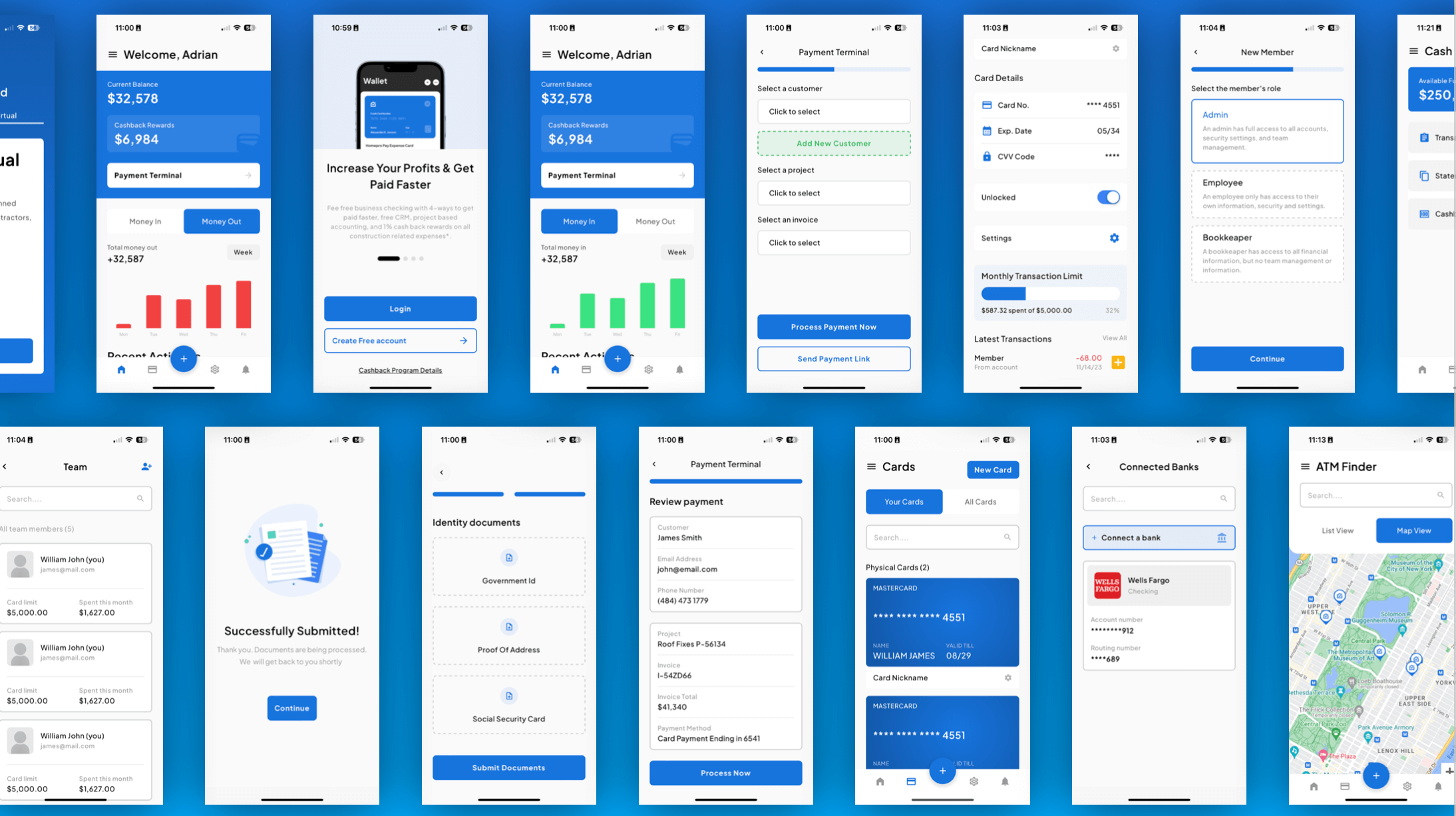
A payments system for US construction contractors that ties every invoice to the project milestone it bills for, collects online through Stripe, and has processed $4M in payments to date.
Cash flow that depends on chasing
For a US construction contractor, the distance between finishing a phase of work and being paid for it is where the business either holds together or does not. Materials and subcontractors get paid on schedule. The customer, often, does not.
Progress billing, invoicing in stages as work completes, is standard practice in the industry. Collecting on each stage is not. A contractor with several active projects is tracking outstanding invoices across all of them at once, usually by email and phone, while the pressure builds behind them. A missed invoice or an underpayment on one project disappears into the noise of the others.
HomeProPay was built for contractors who had reached the scale where that informal tracking had become a liability. Small gaps compound quickly when money is going out on a schedule and coming in on a guess.
Payments that could not live apart from the jobs
The constraint was that financial operations had to be connected to the work they related to. A contractor looking at an outstanding invoice needs the project context immediately: which phase it covers, what work it relates to, who the customer contact is. Switching to a second tool to find that out is where the duplication and mismatch came from in the first place.
So the system was designed around the project, with billing as a property of the project's stages rather than as a separate ledger reconciled afterwards. That ordering decided most of what followed.
It also meant the customer had to be modelled once, with projects and invoices hanging off that single record, so that a returning customer's payment behaviour was visible before the next job was priced rather than discovered halfway through it.
Milestone billing with Stripe collection
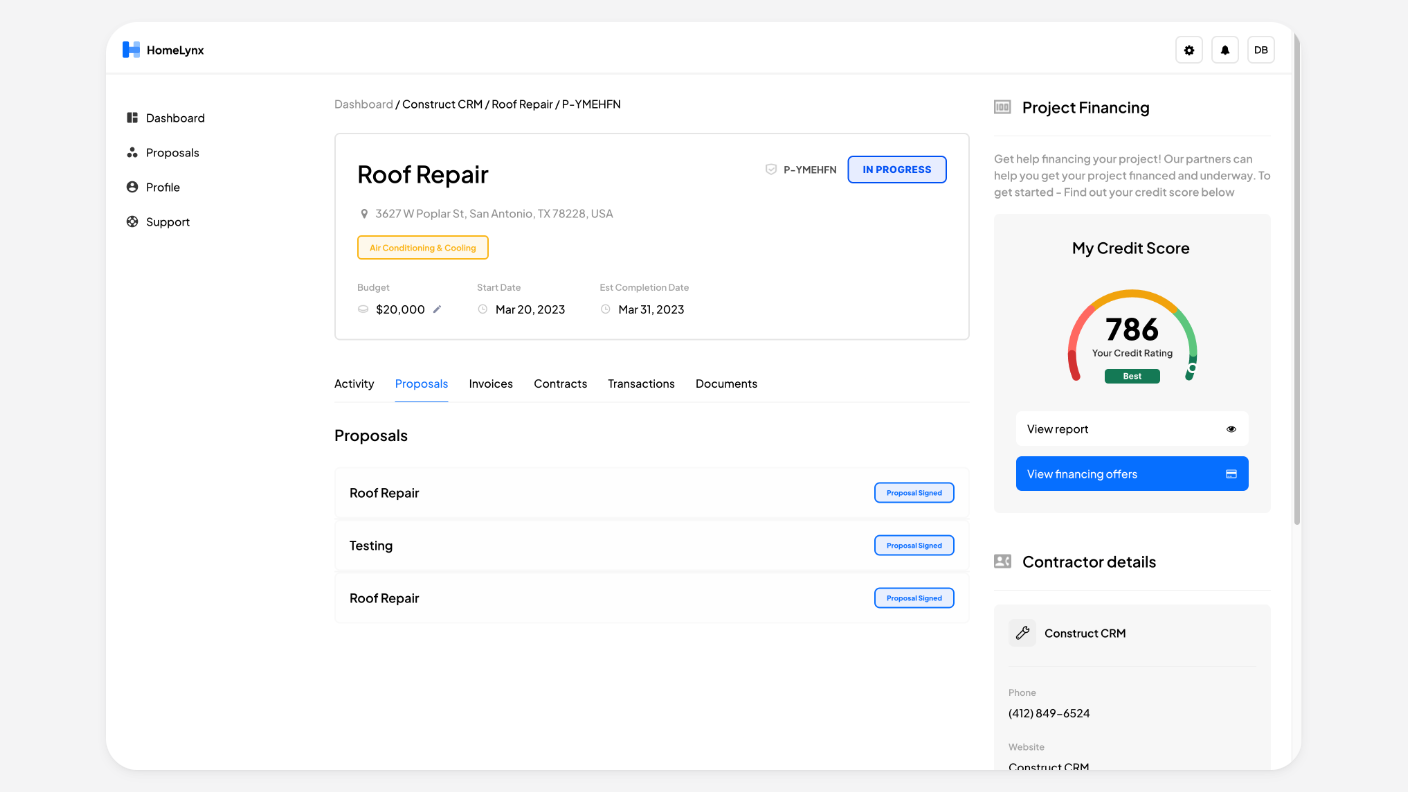
Each customer record connects to their active and historical projects. Every project is broken into billing milestones, foundation, framing, mechanical, completion, and each milestone carries an invoice amount and a due date. When a milestone is reached, the system generates the invoice and sends it to the customer without anyone drafting it.
Stripe handles collection. The customer pays online through a link in the invoice email, and payment status updates in the contractor's dashboard in real time. Partial payments are tracked against each milestone, so the record shows what has been paid against what is due rather than a simple settled-or-not flag. Overdue milestones are flagged automatically.
Customer records hold contact information, project history and payment history across every job. A contractor taking on a returning customer can see how previous invoices were handled before agreeing terms on the next one.
Why Stripe over cheques or manual ACH
Much of this market still collects by cheque or by manual ACH bank transfer, and both were considered. Cheque collection means in-person or mail coordination and offers no real-time view of status. Manual ACH requires the contractor to arrange each transfer and then reconcile it by hand against the project record, which is the same manual work the system was meant to remove.
Stripe's payment link model means the contractor sends an invoice and knows immediately when it is paid, with no collection action on their end. The transaction cost is higher than a bank transfer. At the volumes these contractors operate, the time saved on collection and reconciliation is worth more than the fee, and the certainty of knowing which milestones are paid is worth more than either. The contractor is not in the payments business; they are in the building business, and the system should collect on their behalf.
The billing cycle without the phone calls
A contractor sets up a project once: the customer, the milestones, the amounts, the dates. As work progresses they mark each milestone complete, and the invoice goes out. From that point the system does the following up. Payment arrives through the link and the dashboard updates. A partial payment is recorded against its milestone. A missed due date raises an overdue flag.
What the contractor looks at is a single dashboard of every active project and its financial position. What they no longer do is keep a separate spreadsheet of who owes what, write reminder emails, or match bank statements to invoices at the end of the month.
What contractors run on today
HomeProPay has processed $4M in payments across its contractor clients. Invoice generation runs automatically at each milestone. Outstanding invoices are visible across all active projects from one screen.
The manual chasing that defined collection before has been replaced by automated reminders and a clear overdue flag that shows exactly where attention is needed. Because every payment is written against a milestone on a project, the contractor's financial history is also a record of how each job actually paid out, which is a better basis for the next quote than memory.
Start a project.
Book a call or send a brief. The engineers who would build it read everything.