HomeLynx
A contractor platform that keeps every job's documents, payments and customer communication in one permanent record, with a portal where customers fetch their own paperwork.
A completion certificate nobody could find
A customer selling their property asked the contractor for the completion certificate. The contractor could not produce it. Weeks went into locating and reissuing paperwork for work that had been finished and paid for long before, and that one episode is why HomeLynx exists.
Before the platform, a contractor's toolkit was a notes app for contacts, email for quotes and contracts, a separate tool for invoicing, and a physical or digital folder for inspection reports and certificates. At small volume it holds. At any real scale, documents go missing, customers ask for things buried in old threads, and the handoff between finishing a job and collecting the final payment becomes a coordination exercise.
For contractors doing regulated work, electrical, plumbing, structural, the stakes are higher than inconvenience. Compliance documents carry liability. A lost sign-off sheet becomes a problem the moment a property changes hands or a warranty claim is made.
Documents first, everything else after
The client was clear about the order. The document layer had to be permanent and dependable before anything was built on top of it. Customer management and payments came second, because both would attach to the job record the document layer defined.
That ordering shaped the data model. The job is the unit. A document is not a file in a folder; it is an item on a job, typed, dated and retrievable by anyone entitled to see it. Building it that way first meant every later feature inherited the same permanence.
It also set the standard for everything else. If a certificate had to be findable years later, so did the contract it belonged to and the invoice that closed the job. Permanence stopped being a property of one feature and became the rule for the whole record.
Documents, payments and a portal on one job record
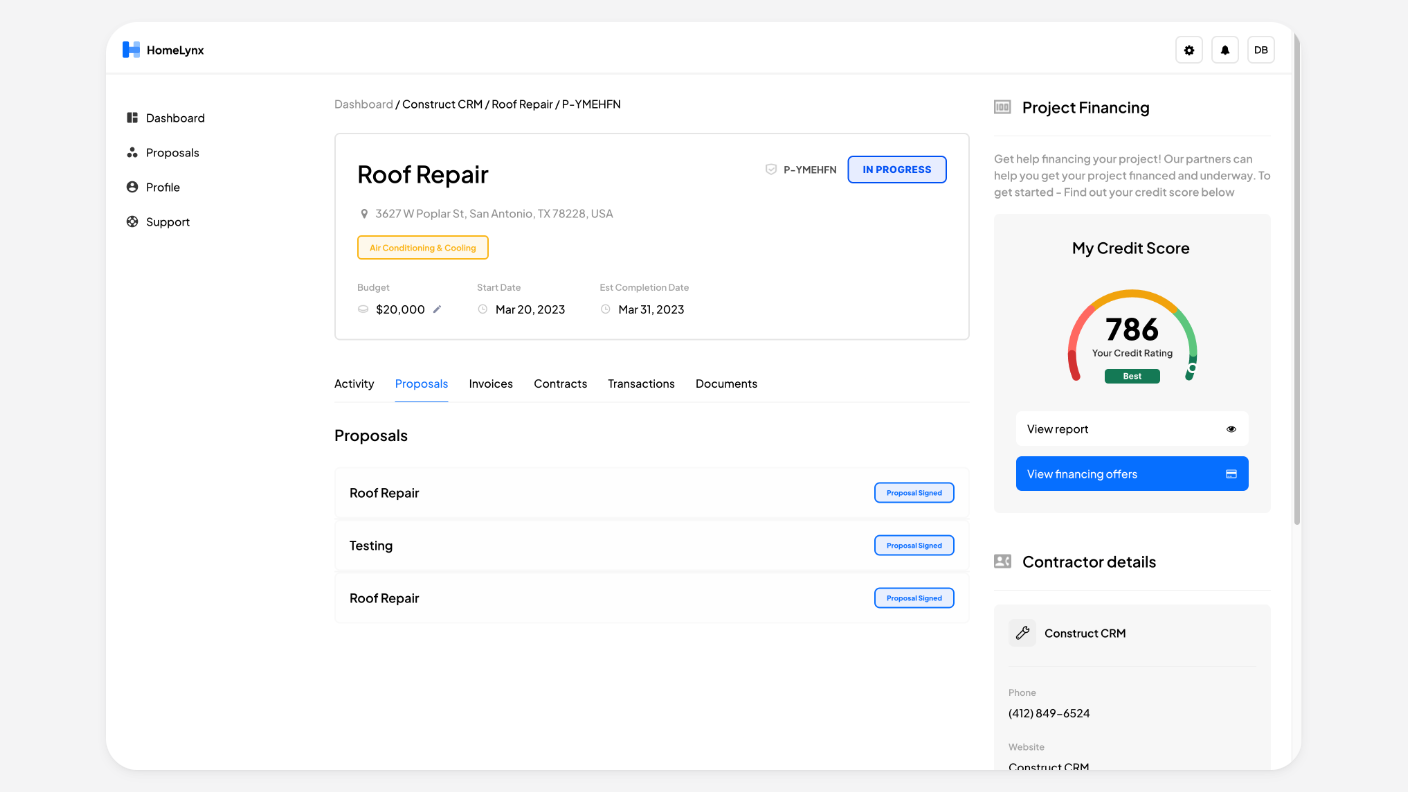
Each job connects to a customer, holds every document and communication, tracks financial milestones and produces a complete record of the engagement from enquiry to completion. Contracts, quotes, inspection reports, compliance certificates and warranties upload directly to the job and are tagged by type, so a completion certificate is found by asking for the completion certificate rather than by searching an inbox.
The customer portal gives each customer access to their own job documents. A customer who needs their certificate logs in and downloads it. No call, no email, no request sitting in the contractor's queue.
Stripe handles payments with milestone-based invoicing: billing events tied to job stages, online payment through a link, automatic status updates back to the job. The contractor's dashboard shows all active jobs, their financial position, and any outstanding documents or unsigned contracts, so the things that would otherwise surface as problems later are visible now.
Why a portal rather than emailing documents out
The simpler build was a delivery workflow: the contractor uploads a document, the system emails it to the customer. It is faster to ship and asks nothing of the customer. We argued against it.
A document delivered by email is effectively lost the day after it arrives. Six months later the customer cannot find it and contacts the contractor, and the contractor is back to searching. The portal creates a permanent, accessible record on the customer's side that removes the retrieval request entirely. It costs more to build and it asks customers to log in rather than open a message, but the volume of resend conversations drops to near zero, which was the whole point.
A job from enquiry to archive
A job opens when the enquiry comes in and a customer is attached. The quote and contract upload to the job; the customer signs and pays the first milestone through the link. As work proceeds, inspection reports and certificates are added and tagged. As stages complete, invoices go out and their status returns to the record.
The contractor's daily view is the dashboard: which jobs are active, what each is owed, which documents are still outstanding, which contracts are unsigned. What they no longer do is answer document requests, chase milestone payments by hand, or reconstruct a job's history from several tools when a question arrives long after completion.
What the platform holds today
HomeLynx contractors manage all job documentation, payments and customer communication from one system. Customers access their documents without contacting the contractor. Payment collection runs automatically at each milestone.
The folders, email threads and separate invoicing tools that used to make up a job record have been replaced by a complete, searchable digital file per job. Every job the platform has handled is retrievable the way the original missing certificate should have been, and every new job is written the same way from its first day.
Start a project.
Book a call or send a brief. The engineers who would build it read everything.