Greenprint
An e-commerce and content platform for Greenprint, a sustainable production company in San Pedro, Mexico. Environmental data sits beside every product so business buyers can decide and purchase in one place.
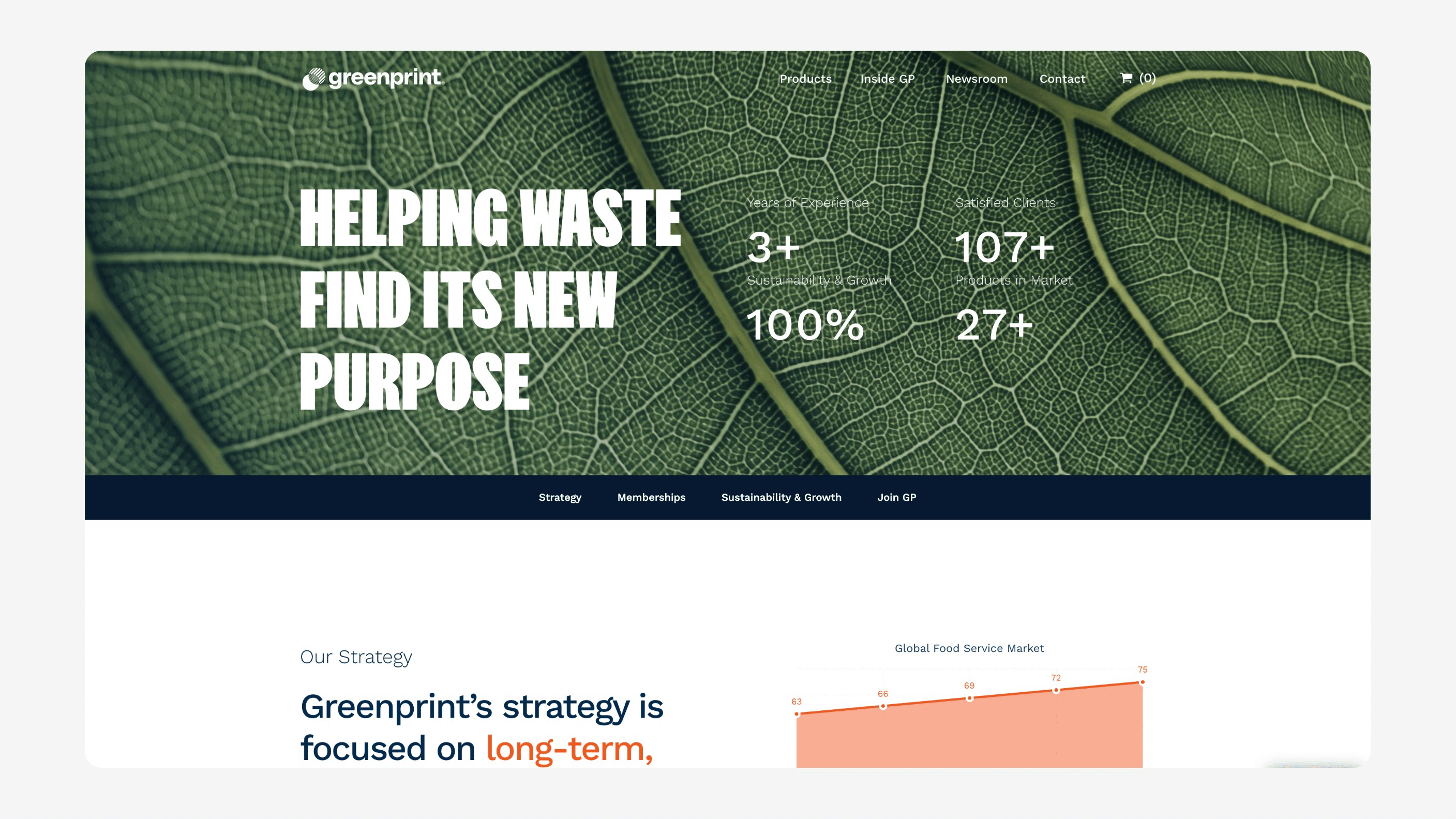
A sustainability brand without a platform to match
Greenprint produces goods using sustainable manufacturing practices: packaging materials, production supplies and branded merchandise for businesses that want their supply chain to reflect their environmental commitments. Its buyers are procurement managers and business owners actively looking to move to suppliers with verified practices. That audience needs evidence before it converts, not a product photo and a price.
Before the platform, Greenprint ran from a brochure website and a sales process that lived in email and referrals. The site said what the company did. It did not give a buyer what they needed to feel confident: the environmental data behind the production, the certifications that backed each claim, and a clear path to purchase once they were ready.
The result was a sales motion that could only close warm leads. Anyone who arrived cold, from a search or a passing recommendation, found the claims but not the proof, and left to ask for it by email or not at all.
Education and commerce that had to work together
The core challenge was that selling Greenprint's products requires context. A procurement manager considering a switch wants to know which certifications are held, how the carbon footprint compares, and where the production process differs from a conventional supplier's. A product listing does not answer any of that.
Answering those questions on a separate page the buyer had to find meant the context was missing at the point of decision. The educational material had to live alongside the product experience, not in a blog section, but embedded in the purchase path itself.
There was a second constraint, commercial rather than editorial. Business buyers rarely order once. Repeat orders, bulk quantities and negotiated pricing are the norm, so the platform had to handle a logged-in account with its own prices, not only a public cart.
A product and content platform built around the buying decision
Products are presented with environmental data beside the commercial specifications: certifications, materials sourcing, emissions comparisons where available, and the specific claim a buyer can pass on to their own customers about the product's credentials. That last element matters. A business purchase needs internal justification, and the product page hands the buyer the language to make that case to whoever signs off.
The content layer, guides on sustainable procurement, explanations of certification standards, case studies of businesses that have made the switch, is organised around the questions buyers have at each stage. A buyer on a product page who wants to understand a certification can go deeper without leaving the site, then return to the product with the question answered.
Purchases complete through Stripe. Business accounts log in to a workflow built for bulk and repeat orders, where custom pricing surfaces automatically for the account rather than being quoted by hand each time.
Why integrated content over a separate blog
The standard approach is to build an e-commerce site and bolt a blog beside it. The two run in parallel, structurally separate, with the blog feeding search traffic and the shop taking orders. For most brands that is fine. For Greenprint it would have split the product from the reason to buy it.
The content here is part of the product, not a marketing supplement. A buyer who understands the environmental data is a more confident buyer, and a more confident buyer commits sooner. Keeping the material alongside the product means it is available when it is relevant, during consideration, rather than in a research phase the buyer may never get round to.
The cost of this choice is editorial discipline. Every guide has to be written to sit next to a product and answer a purchase question, not to fill a content calendar. That is a smaller library, maintained more carefully.
How a buyer moves through it
A procurement manager lands on a product, reads the specifications and sees the certification listed beside them. A tap opens the explanation of what that standard covers. They read the comparison with a conventional supplier, come back, and add the product to a cart, or log in and see their account's volume pricing already applied.
The order goes through Stripe without a conversation. The Greenprint team no longer answers the same certification question by email, no longer types up a custom quote for a returning account, and no longer relies on a referral having happened before a buyer arrives.
Email still has a role for the unusual request. The routine purchase, the one that used to need a thread, no longer does.
What Greenprint operates with today
Products are listed with environmental credentials next to commercial specifications. Educational content answers buyer questions inside the purchase path. Business accounts access volume pricing through the platform, and payment runs through Stripe. From its base in San Pedro, Mexico, the company now has a way to convert buyers who arrive without a referral.
The email-led sales process that carried every conversion before has been supplemented rather than replaced. What the platform added is the missing middle: proof at the point of decision and a checkout that does not wait for a reply.
Start a project.
Book a call or send a brief. The engineers who would build it read everything.